
Why Every Messaging App Wants to Replace WhatsApp in India—But No One Has
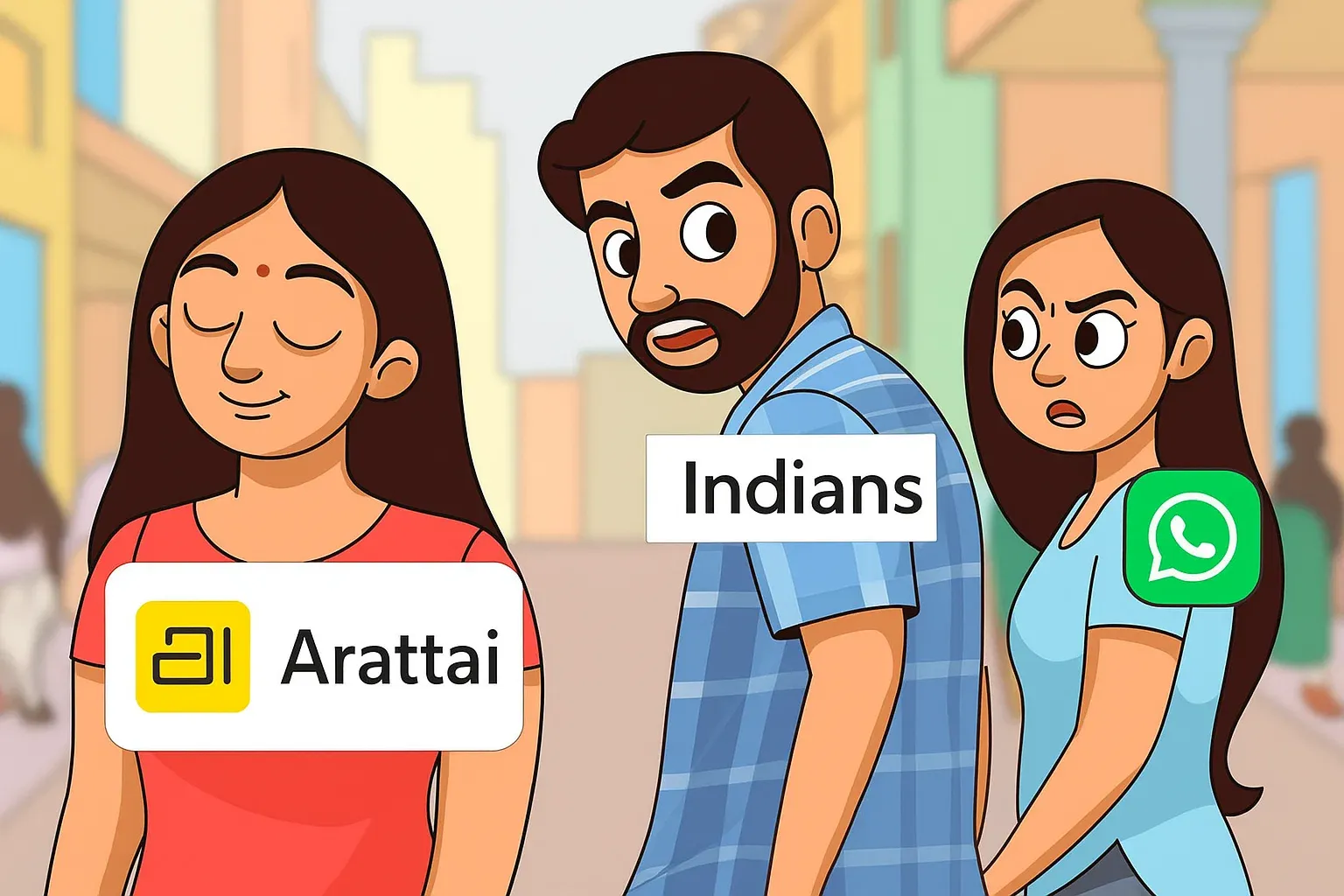
The Bold Claim
Every few years, a new challenger rises up and declares: “We’ll replace WhatsApp in India.” Today, it’s Zoho’s Arattai at the top of app store charts. But before we get swept up, let’s zoom out and look at the long history of high-profile apps making the exact same promise.
Challengers That Tried—And Failed
Hike
- Peaked at 100M users, valued at $1 billion
- Innovative, local stickers, “hidden mode”
- Officially shut down in 2025 despite its unicorn status
Koo
- $60M in funding, government endorsements
- Tried to ride “Make in India” wave
- Shut down in July 2024
JioChat
- Reliance’s answer to WhatsApp
- Heavy integration, super-app ambitions
- Rarely used today compared to WhatsApp’s popularity
BBM, Yahoo Messenger, MSN Messenger
- Global giants
- Couldn’t adapt to mobile-first India
Even in the 2021 privacy scare, upstarts like Signal saw 2.3M downloads in five days—barely denting WhatsApp’s massive user base.
Why WhatsApp’s Grip Is Unbreakable
- Over 535 million active users in India—nearly every smartphone owner
- Your family, friends, work, and society groups are all there—that’s your entire network
- Switching means starting chats and groups from scratch
- It’s simple, reliable, and nearly universal: no learning curve required
What Arattai Brings
- Developed by Zoho, a trusted, profitable Indian unicorn
- Riding a current wave: 350,000+ daily signups this week
- Endorsed by government ministers, and optimized for privacy and multi-device use
The Real Challenge
It’s never just about better features. For a messaging app to succeed, it must convince entire networks—families, offices, societies—to migrate together. Network effects are nearly impossible to break once established.